
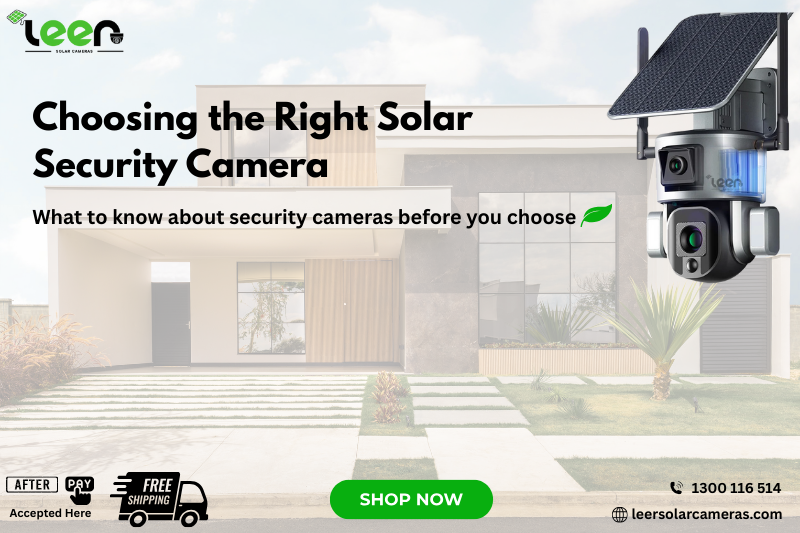
Solar security cameras have become one of the most practical security solutions for Australian homes, farms, construction sites, and remote properties. Solar power has become an option for many consumers who used to rely on traditional wired systems due to increasing electricity prices and the growing demand for off-grid security solutions. However, as with any other type of camera, not all solar cameras operate at the same efficiency level.
So it is important that before you purchase a wireless solar security camera for your home or business, you understand some key things about Australian solar security camera systems so you can select one that will perform consistently well under Australian conditions. In this guide, we provide everything you need to know when purchasing a solar-powered security camera for your property in Australia. We cover all aspects including lasers, video quality, battery systems and real-world experience with these cameras.
1. Understanding How Solar Security Cameras Work
The solar-powered security camera runs from a built-in rechargeable battery that is charged by a solar panel. The battery is charged during the day, allowing the camera to operate without connecting to mains power 24 hours a day.
This makes solar cameras ideal for:
-
Remote or rural locations
-
Farms and agricultural land
-
Construction sites
-
Properties without access to power
-
Temporary surveillance needs
Modern wireless solar security cameras are designed to run efficiently, activating recording only when motion is detected, which helps conserve power and extend battery life.
2. Choosing Between WiFi and 4G Connectivity
One of the most important decisions is choosing how your camera connects to the internet.
WiFi Solar Cameras
WiFi-based solar cameras require a stable internet connection. They are best suited for homes or properties where WiFi coverage is strong and consistent.
4G Solar Security Cameras
If your property does not have reliable WiFi, a 4G solar security camera is the better option. These cameras use a SIM card and mobile data to transmit footage, making them ideal for remote and off-grid locations.
A 4G camera security setup allows you to:
-
Monitor properties without internet infrastructure
-
Receive alerts in real time
-
Access live footage from anywhere
For farms, vacant land, and construction sites, 4G models are often the most dependable solution.
3. Why Video Quality Matters in Real-World Surveillance
The video resolution of your cameras will be a major factor on how well your security footage will serve you. Cameras with low resolution may pick up the motion but may not provide enough useful detail, especially during those times that are critical.
A 4K solar security camera offers significantly better clarity, allowing you to:
-
Identify faces and vehicles more clearly
-
Zoom in without losing detail
-
Monitor larger areas effectively
High-resolution footage is especially important for large properties, rural settings, and locations where incidents may occur at a distance.
4. Battery Capacity and Solar Panel Efficiency
Australian weather can vary widely depending on location and season. A reliable solar security camera must be able to perform during cloudy days and shorter winter daylight hours.
When choosing a camera, look for:
-
High-capacity batteries designed for multi-day operation
-
Efficient solar panels that recharge quickly
-
Smart power management features
Cameras with larger battery capacity and higher wattage solar panels are better suited for continuous monitoring and long-term reliability.
5. Motion Detection and Smart Alerts
Motion detection is a core feature of any security camera, but not all systems are equally effective.
Modern solar cameras use intelligent motion detection to:
-
Reduce false alerts caused by animals or weather
-
Send instant notifications when activity is detected
-
Record only when needed to conserve battery life
For buyers comparing wireless solar security cameras, motion accuracy and alert reliability should be a top priority, especially for unattended properties.
6. Coverage Area and Optical Zoom
The size of the area you need to monitor should influence your camera choice.
For small residential areas, standard wide-angle coverage may be sufficient. For farms, construction sites, or commercial properties, cameras with optical zoom provide greater flexibility.
Models with strong optical zoom allow you to:
-
Monitor long distances
-
Cover wide outdoor spaces
-
Reduce the need for multiple cameras
This is particularly useful in rural Australia, where properties often span large areas.
7. Weather Resistance for Australian Conditions
Australia’s climate can be harsh, with high heat, heavy rain, dust, and strong winds. Your solar security camera must be designed to withstand these conditions year-round.
Key features to look for include:
-
Weatherproof housing
-
UV-resistant materials
-
Secure mounting options
A well-built camera ensures long-term durability and consistent performance, even in extreme environments.
8. Installation and Ease of Use
One of the biggest advantages of solar security cameras is ease of installation. Because they do not require wiring, they can be installed quickly in almost any location.
Most modern systems offer:
-
Simple mounting options
-
Mobile apps for setup and monitoring
-
Remote access to live and recorded footage
This makes solar cameras a practical option for both permanent installations and temporary security needs.
9. Matching the Right Camera to Your Property
Different properties require different solutions. For example:
-
Homes may benefit from compact WiFi-enabled solar cameras
-
Farms and rural land often require a 4G solar security camera
-
Large properties benefit from high-resolution and zoom capabilities
Choosing a camera that aligns with your specific environment ensures better coverage, fewer blind spots, and improved security outcomes.
10. Why Solar Security Cameras Make Sense in Australia
With abundant sunlight, vast rural areas, and increasing demand for off-grid solutions, solar security cameras are particularly well suited to Australian conditions.
Compared to traditional wired CCTV systems, solar-powered options offer:
-
Lower installation costs
-
Greater flexibility
-
Energy efficiency
-
Reliable operation in remote locations
Whether you are securing a home, farm, or commercial site, solar-powered surveillance provides a modern and sustainable approach to property protection.
Final Thoughts
When selecting a security camera, it is important not only to pick the right product but also to choose the most appropriate solution for your environment; connectivity requirements and longevity of performance must be taken into consideration.
At Leer Solar Cameras, we provide you with real security value: video clarity, battery life, how you connect and where you reside, and durability.
For Australian buyers, especially those in rural or off-grid locations, investing in a well-built 4K solar security camera or 4G camera security system can provide peace of mind without the limitations of traditional wired setups.
FAQs
-
Are 4K solar security cameras suitable for Australian weather conditions?
Yes, a 4K solar security camera is well suited for Australian conditions when built with weather-resistant materials and efficient solar charging. High-resolution footage helps capture clear details across large outdoor areas, even in heat, rain, or dust.
-
How reliable is 4G camera security in remote or rural areas of Australia?
4G camera security works reliably in remote and rural areas as long as mobile network coverage is available. These cameras use a SIM card to send alerts and footage, making them ideal for farms, construction sites, and off-grid properties.
-
Do wireless solar security cameras work without electricity or internet?
Wireless solar security cameras can operate without mains electricity by using solar panels and built-in batteries. Depending on the model, they can function using either WiFi or 4G connectivity, allowing monitoring even in locations without fixed internet access.
-
What is the difference between a 4G solar security camera and a WiFi solar camera?
A 4G solar security camera connects using mobile data, while a WiFi solar camera relies on a local internet network. In areas without stable WiFi, especially across rural Australia, 4G solar cameras are often the more practical choice.
-
Is a solar-powered security camera a good long-term investment in Australia?
Solar-powered security cameras are a good long-term investment in Australia due to abundant sunlight and rising energy costs. They offer flexible installation, low running costs, and reliable performance for residential, commercial, and rural properties.