
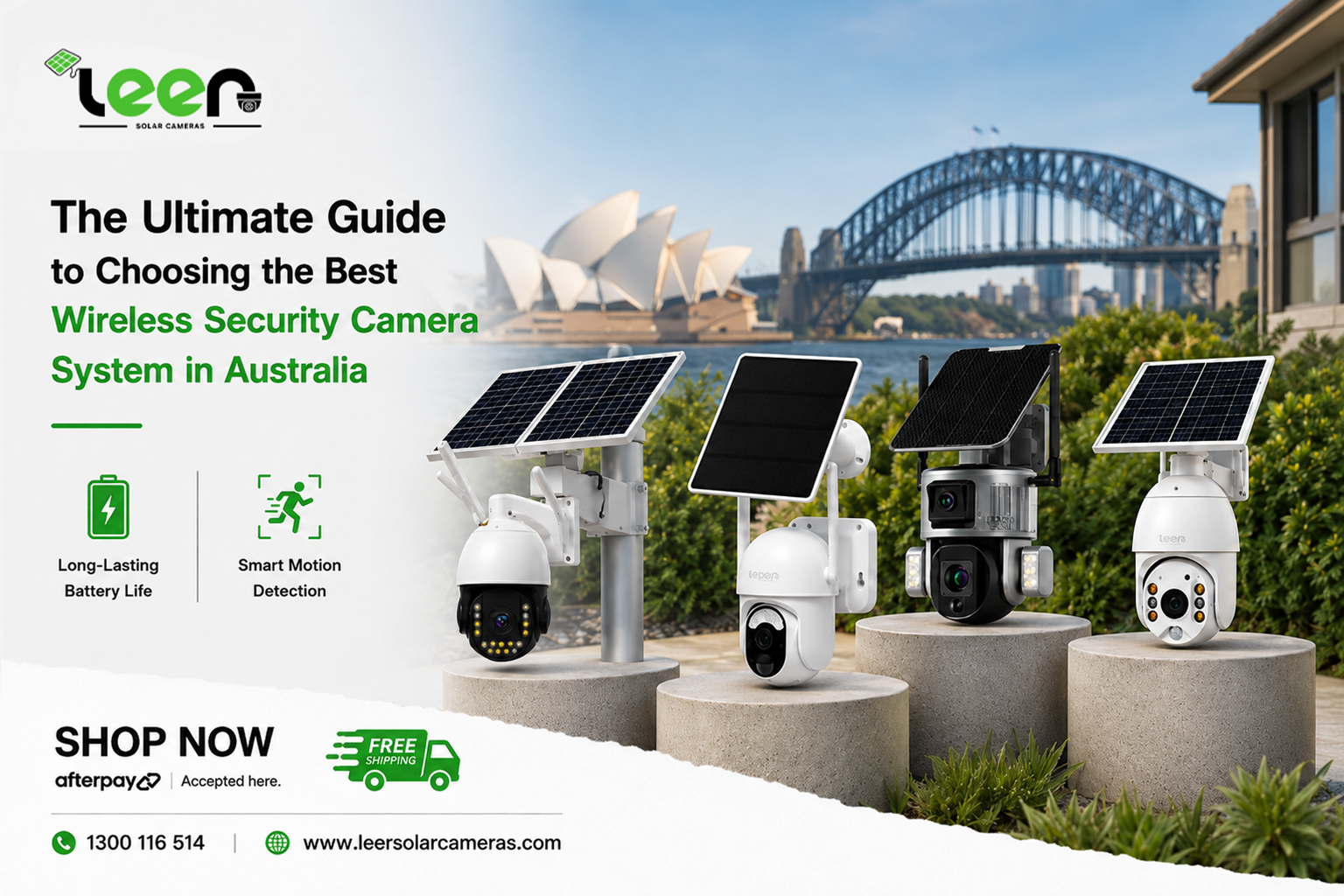
Choosing the right wireless security camera system in Australia involves more than comparing prices or selecting the highest resolution. The best system should suit your property, internet availability, monitoring needs, local weather conditions, and budget. For locations where mains power or fixed internet is limited, solar security cameras can provide a practical and flexible surveillance solution.
Whether you need to protect a home, business, farm, rental property, or construction site, modern wireless cameras make it easier to monitor important areas without extensive cabling. However, features such as Wi-Fi or 4G connectivity, night vision, motion detection, battery life, solar charging, storage, and remote access can make the selection process confusing.
This guide explains the key factors to consider before purchasing a wireless security camera system in Australia, including:
- Camera resolution and image clarity
- Night vision and motion detection
- Wi-Fi, 4G, and mobile app connectivity
- Battery-powered and solar-powered options
- Cloud and local storage
- Weather resistance for Australian conditions
- Installation requirements and ongoing costs
By the end of this guide, you will understand which features matter most and how to choose a reliable security camera system for your location and surveillance needs.
Benefits of Wireless Security Camera Systems
Wireless security camera systems offer a multitude of advantages, making them an increasingly popular choice among homeowners and businesses alike. One of the primary benefits is the ease of installation. Unlike wired systems that require extensive cabling and professional installation, wireless cameras can often be set up by the user with minimal tools. This not only saves time but also reduces installation costs, making it a more economical option for many. With just a few simple steps, users can position their cameras in optimal locations, ensuring comprehensive coverage of their property.
Another significant advantage of wireless security camera systems is their flexibility and scalability. Users can easily add additional cameras to their existing system without the constraints of wiring. This adaptability allows homeowners and business owners to expand their security coverage as their needs evolve. Whether it's adding cameras to cover new areas or integrating more sophisticated technology over time, wireless systems make it simple to enhance security measures without the hassle of rewiring or major renovations.
Moreover, modern wireless security cameras come equipped with advanced features such as high-definition video quality, night vision, and motion detection. These features enhance the overall effectiveness of a security system, ensuring that users capture clear and actionable footage regardless of the time of day. Additionally, many wireless systems offer cloud storage options, enabling users to access their footage from anywhere in the world. This level of convenience ensures that property owners can monitor their premises in real-time, providing peace of mind even when they are away.
Factors to Consider When Choosing a Wireless Security Camera System
Night vision capabilities are another critical factor. A security camera system is only as good as its ability to capture footage in low-light conditions. Many modern wireless cameras come with infrared sensors that allow for night vision. When choosing a camera, assess the range of its night vision and whether it provides color video or just black and white in the dark. This feature can be vital for monitoring your property during nighttime hours when most break-ins occur.
Motion detection is yet another feature to consider. A camera that can alert you when it detects movement can be invaluable for real-time monitoring. Look for systems that allow you to customize sensitivity settings, ensuring that you receive notifications only when significant movement occurs. Some systems even integrate with mobile apps to send alerts directly to your phone, allowing for immediate action if needed. Evaluating these factors will help you choose a wireless security camera system that aligns with your security needs.
Types of Wireless Security Camera Systems
Wireless security camera systems come in various types, each designed for specific applications and environments. One common type is the IP camera, which connects to the internet and allows for remote viewing and management via smartphones or computers. These cameras typically offer high-definition video and come with features like two-way audio and cloud storage options. IP cameras are ideal for users who want to monitor their property from anywhere and require a system that is easy to integrate with smart home technology.
Another popular option is the battery-powered camera, which is designed for quick and easy installation without the need for electrical outlets. These cameras are perfect for outdoor use, especially in locations where running wires would be impractical. However, it’s essential to consider battery life and whether the camera has features like motion detection to conserve power. Battery-powered cameras are often compact and weather-resistant, making them suitable for a variety of environments.
Lastly, there are wireless security camera systems with solar power capabilities. These cameras come with built-in solar panels, allowing them to recharge during the day and operate continuously without the need for frequent battery replacements. This type of system is particularly beneficial for remote locations where access to electricity is limited. By understanding the different types of wireless security camera systems available, you can select one that best suits your surveillance needs and environmental conditions.
Comparison of Wireless Security Camera System Features
When comparing wireless security camera systems, it's essential to evaluate the features that set each system apart. One key feature is the field of view. Cameras with a wider field of view can cover more area, reducing the number of cameras you need to install. Most cameras offer fields ranging from 90 to 180 degrees, so consider your property layout to determine which will work best for your needs.
Another important comparison point is video storage options. Wireless security cameras often provide various storage solutions, including cloud storage and local storage through SD cards. Cloud storage typically requires a subscription, while local storage is a one-time purchase but may limit the amount you can save. Assess your preferences for accessing and storing footage, as this can significantly impact your user experience.
Lastly, consider the integration with other smart home devices. Many modern wireless security systems can connect with smart home ecosystems, allowing for enhanced functionality and convenience. Look for systems that can integrate with platforms such as Google Assistant, Amazon Alexa, or smart lighting systems. This interoperability can enhance your overall security setup, allowing for greater control and automation of your home security.
Product Offerings from Leer Solar Cameras
Leer Solar Cameras provides a carefully selected range of outdoor security solutions for homes, farms, worksites, warehouses, and remote properties. Each model is designed for a different level of coverage, helping customers choose a camera based on viewing distance, image quality, location size, and connectivity needs.
- ArmorEye 2.0: A high-performance option for properties that need sharp video and detailed long-range viewing. It is well suited to larger homes, farm entrances, sheds, yards, and commercial locations where clear monitoring matters.
- Horizon: Designed for wide and open spaces, Horizon is ideal for farms, industrial areas, remote gates, and construction sites. Its powerful viewing capability makes it a strong choice for monitoring activity across greater distances.
- Guardian S10: A practical everyday security camera for homes, workshops, small farms, and defined outdoor areas. It offers reliable remote monitoring without the need for a complicated wired setup.
- SolarLite: A compact and cost-effective option for entry points, garages, side yards, sheds, and smaller outdoor spaces. It is suitable for customers who want simple, convenient surveillance in a focused area.
From basic property monitoring to advanced long-range surveillance, the range makes it easier to select a camera that fits your site and security priorities. Consider the size of the area, available network connection, required image detail, and preferred monitoring distance before choosing the right model.
Installation and Setup of Wireless Security Camera Systems
Installing and setting up a wireless security camera system is typically a straightforward process, but it’s essential to follow specific steps to ensure optimal performance. The first step is to determine the best locations for your cameras. Consider areas that require surveillance, such as entry points, driveways, and backyards. Ensure that the cameras are positioned at a height that is difficult for intruders to tamper with while still providing a clear view of the area.
Once you've identified the locations, it's time to install the cameras. Most wireless cameras come with mounting hardware and detailed instructions. Use the provided tools to secure the cameras firmly in place. If the cameras are battery-operated, ensure that you install them in a location with sufficient sunlight if they have solar capabilities. After mounting, connect the cameras to your Wi-Fi network following the manufacturer's instructions, typically done through a mobile app. This step may involve scanning a QR code or entering your network credentials.
Finally, configure the settings to tailor the system to your needs. This includes adjusting motion detection sensitivity, setting up alerts, and scheduling recording times if necessary. Many systems also allow you to create user profiles for family members or employees, enhancing accessibility while maintaining security. Once everything is set up, conduct a test to ensure that all cameras are functioning correctly and that you can access the footage remotely via your mobile device.
Maintenance and Troubleshooting Tips for Wireless Security Camera Systems
Maintaining your wireless security camera system is crucial for ensuring its longevity and effectiveness. Regularly check the camera lenses and housing for dirt, dust, or obstructions that could impair video quality. Most cameras can be easily wiped down with a soft, dry cloth. If your cameras are installed outdoors, it may be necessary to perform this maintenance more frequently due to environmental factors.
Battery life is another aspect that requires attention. For battery-powered cameras, monitor the battery levels regularly and replace or recharge them as needed. Many systems will send alerts when battery levels are low, but it’s good practice to check manually to avoid any gaps in surveillance. For systems that utilize solar power, ensure that the solar panels are clean and positioned correctly to maximize sunlight exposure.
In case of connection issues, first check the Wi-Fi signal strength at the camera location. If the signal is weak, consider moving the camera closer to the router or using a Wi-Fi extender. Additionally, ensure that the camera firmware is up to date, as manufacturers frequently release updates that enhance performance and security. Following these maintenance and troubleshooting tips will help keep your wireless security camera system functioning optimally.
Customer Reviews and Ratings of Wireless Security Camera Systems
Customer reviews and ratings can provide valuable insight into the performance and reliability of wireless security camera systems. When evaluating products, pay attention to overall satisfaction ratings and read through detailed reviews to gain a holistic understanding of user experiences. Look for feedback on key features such as video quality, ease of installation, and customer support.
Many customers highlight the importance of video clarity and night vision capabilities. A common praise among satisfied users is the ability to see high-definition footage, especially during nighttime monitoring. Conversely, negative reviews often point to issues such as poor customer service or difficulties with connectivity. These insights can help you weigh the pros and cons of different systems before making a purchase.
In addition to individual reviews, consider exploring consumer reports or dedicated technology review websites that provide in-depth comparisons and ratings based on expert analyses. These platforms often conduct rigorous testing and can offer objective evaluations of features and performance. By taking the time to read reviews and ratings, you can make a more informed decision, ensuring that you select a wireless security camera system that meets your expectations.
Conclusion
Choosing the best wireless security camera system in Australia requires careful consideration of various factors, including features, installation, maintenance, and customer feedback. By understanding the benefits of wireless systems and examining the different types available, you can identify the right solution for your specific needs. Remember to prioritize video quality, night vision, and motion detection capabilities, as these features are crucial for effective surveillance.
Take the time to research popular brands and compare their offerings to find a system that fits your budget and requirements. Reading customer reviews can provide additional context and help you avoid potential pitfalls. Once you have selected a system, ensure proper installation and ongoing maintenance to maximize its effectiveness.
Ultimately, investing in a wireless security camera system is an essential step toward protecting your property and loved ones. By following the guidelines provided in this ultimate guide, you can confidently choose a system that offers peace of mind and enhances your security setup. Remember, the right system not only safeguards your space but also empowers you with the ability to monitor your property from anywhere, at any time.